Showing posts with label Spotify. Show all posts

Monday, December 14, 2015

Taylor Swift and Apple - BFFs after all

Way back at the dawn of time, Apple Music time that is, Taylor Swift had a beef with Apple Music.   This wasn't her first run in with a big corporation.  She had previously taken on Spotify and withdrawn her music from their service because she felt what they paid the artists for the music devalued it.  Her battle with Apple was a similar one and eventually forced them to change their policy.  They now pay artists for tracks played during a user's three month free trial period of using Apple Music.   Now that Apple have bowed to her demands, Taylor Swift's music is streamed exclusively on Apple Music - forcing fans to sign up to the service if they want to stream her music. On top of this, if fans want to watch video of her most recent tour, they will also have to sign up to Apple Music.  Her 'DVD' of her 1989 tour is being exclusively streamed on the service.

What does all this show? The power of the artist?  The power of the institution?  A reduction in consumer choice?

Thursday, March 26, 2015

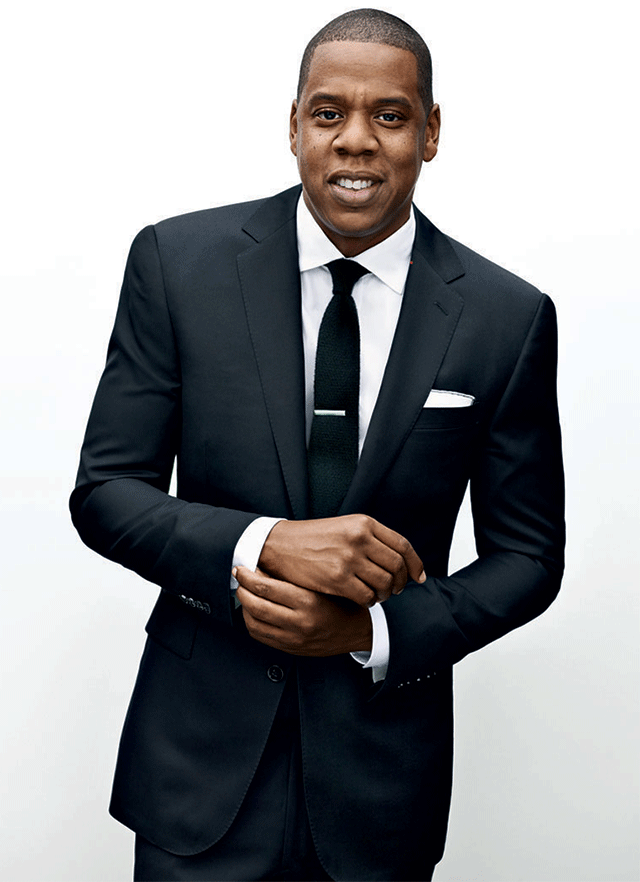
Is Jay-Z the musicians' champion or Universal's heavy hitter?

Lots of intriguing stuff around Jay-Z, Universal, Taylor Swift and others happening recently.  It all began a few weeks ago when one of the Jay-Z's companies bought Aspiro, a Swedish music streaming company that runs the streTidal.  Flashback further and we remember that Taylor Swift removed all her music from Spotify, claiming that it didn't place enough value on music.  There was lots of speculation around why else she may have done this, including rumours that it was an effort to increase sales of her 1989 (which it did) and that her music would appear on Google's new streaming service, Youtube Music Key. 


This week her back catalogue (her previously recorded music) has turned up on Tidal, which should make the service much more appealing to consumers.  It needs to be given the competition that now exists on the streaming market.  As well as market leader Spotify, we now have Pandora, Youtube Music Key and Apple's soon to re-launch Beats Music.  Tidal is also banking on audiences being drawn to the better quality audio of its service - CD quality, HD sound.  It's monthly subscription is £10 more expensive than Spotify's so the content has to be better.  They seem to be trying offer the audience a more immersive experience as well with music videos and exclusive interviews also available.

What makes this all the more interesting is a big meeting held around the time of the Grammys.  Jay-Z gathered together some of the biggest music artists to discuss a way forward for the music industry.  According to this Forbes article, they may have discussed artists taking control without record labels. It could be that Tidal is a service that would allow artists to do so. The reason artist make so little from services like Spoitify is because the record label takes such a big cut.  Alternatively, he may have just been helping out Universal as all the artists there, bar Madonna, are Universal artists and Jay-Z is also a Universal artists (the label he controls, Roc-a-Fella, is a subsidiary of Universal).  The Forbes article is well worth a read - all two pages!

Wednesday, March 11, 2015

How Much Do Artists Make From Spotify?

Time Magazine has created an interesting Spotify earnings calculator where you can see how much major artists earn through being streamed on Spotify.  It's well worth looking at as evidence for the debate over whether streaming is really the future of music distribution. As we know Taylor Swift removed her music from Spotify, claiming that the amount paid doesn't place enough value on her music.  In the past the musician Billy Bragg has claimed that the problem isn't with how much Spotify pays per stream ($0.06 - $0.84 according to Time) but the percentage that the record company takes before the artist gets paid.

Monday, November 03, 2014

A Gift From Taylor Swift To You

So you want a neat and tidy argument about new models for making money in the music industry? And you want it all wrapped up in a Universal linked example? Well Taylor Swift (distributed internationally by Universal Music) has duly obliged by removing all her music from Spotify. Read all about it here - http://www.bbc.co.uk/newsbeat/29885973. Within you will find Taylor's arguments about preserving the value of music and, on the opposing side, Spotify's vision of making money from music

Wednesday, November 06, 2013

Are Spotify the new Gatekeepers in the Music Industry?

There was a brief moment a few years ago when digital technology promised to get rid of record companies and allow artists to directly reach out to audiences.  The band Radiohead were pioneers in doing this when they released their In Rainbows album digitally through their website.  They invited the audience to download it and pay as much as they thought it was worth.  The great hope at the time was that role of the record company as the "gatekeeper" between artist and audience would gradually disappear as digital production and distribution made everything more affordable and accessible and dispensed with the need the record company.

The idea of the 'gatekeeper' is a vital one.  It is the gatekeeper who controls who goes in and who goes out - what artists get signed, when and how the public get to hear about them and how the artist interacts with their audience. Think about the debate sparked by Sinead O'Connor about Miley Cyrus's image and who is responsible for it.  This was added to recently when Charlotte Church spoke out about record company execs convincing her that in order for her to sell to an audience, she would need a more sexualised image. Gabriella Cilmi talks about a similar experience in today's Metro.  The gatekeeper, here, is a very powerful figure and Thom Yorke from Radiohead has recently argued that instead of the record companies, the gatekeeper role is now being taken up by streaming services such as Spotify.  Because Spotify have become so dominant, they have greater control whether your music is heard or not.  If the mass audience are using Spotify to access new music, it makes it much more difficult for artists who are not on the service to get heard.  Read more by clicking on all the links - the more you read, the more case study material you have for the exam.

For those of you unfamiliar with Radiohead, check this out.

Streaming - and the debate goes on.

You've read what David Byrne had to say about the effect of streaming services on artists and creativity - your homework this week in case you needed reminding.  This article about musicians in Sweden suing record labels has a ton of facts and figures that can be used in the exam.  The musicians claim that the labels aren't giving them a big enough cut of money made through streaming services.  Depending on your record contract, an artist could be in a position where they make £500 compared to the record companies £4,500 from 1 million plays of their music on a streaming service, e.g. Spotify.  On Facebook, the musician and activist Billy Bragg, has argued that musician's shouldn't complain about the streaming services but try to negotiate better contracts with the record companies.

If you haven't heard of Billy Bragg before, check this out.